
A California man says Wendy’s used a hidden pricing playbook to raise the cost of burgers and fries at drive-thrus nationwide, and he’s suing to prove it.
Quick Take
- A federal class-action lawsuit accuses Wendy’s and point-of-sale software maker NCR Voyix of coordinating menu prices nationwide.
- Plaintiff Andy Garcia filed the case in Maryland federal court on November 23, 2026, claiming it violates antitrust law.
- The complaint says Wendy’s acted as a “common decisionmaker” controlling prices for thousands of franchise and company-owned restaurants.
- The case follows a similar 2026 lawsuit against McDonald’s over software-driven pricing coordination with franchisees.
What The Lawsuit Actually Claims
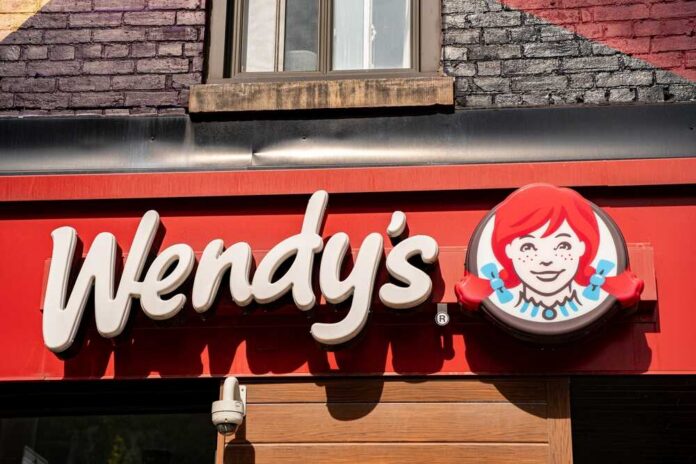
The case, Garcia v. The Wendy’s Co., landed in the U.S. District Court for the District of Maryland on November 23, 2026. Andy Garcia, a California customer who says he eats at Wendy’s weekly, claims the chain conspired with its own franchisees to set and raise prices nationwide. The suit names both Wendy’s and NCR Voyix, the point-of-sale software company that processes transactions at Wendy’s locations.
Franchise restaurants are supposed to operate as separate businesses that set their own prices based on local competition. Garcia’s complaint argues that never really happened. Instead, it claims Wendy’s functioned as a single decision-maker steering prices across thousands of locations that were legally required to compete with each other. That distinction, between independent competitors and a centrally run pricing machine, sits at the heart of federal antitrust law.
In a proposed class action, a California resident alleges that Wendy's conspired with its franchisees to set and raise menu prices. pic.twitter.com/DL3Kl3E3XK
— CBS News Texas (@CBSNewsTexas) November 24, 2026
How The Data Allegedly Made It Work
The complaint points to a specific tool: transaction-level sales data collected through the point-of-sale system and allegedly shared back through Wendy’s and NCR Voyix’s software. Reuters reported the suit claims this data sharing let the companies centralize pricing decisions rather than leave them to individual franchise owners. CBS News described the arrangement as a “pricing scheme” that reduced competition across restaurants and pushed costs higher for everyday customers.
This isn’t Wendy’s first brush with pricing controversy. In February 2024, the company announced plans to test digital menu boards that could adjust offers based on demand. Public backlash was swift, with many assuming “surge pricing” was coming to the drive-thru. Wendy’s quickly clarified it had no plans to raise prices during busy hours and intended the technology for discounts during slower periods, not price hikes.
A Pattern Showing Up Across Fast Food
Wendy’s isn’t alone in facing this kind of claim. A separate 2026 lawsuit accused McDonald’s of using artificial intelligence tools to help fix menu prices in coordination with franchisees, marking what Reuters called the latest case alleging companies use new technology to collude. That complaint alleged McDonald’s and its franchisees agreed to share nonpublic pricing data and set prices using shared software systems.
Legal scholars have been warning about this exact shift for years. Research from Stanford Law School found that self-learning pricing algorithms can produce collusive-style outcomes even without any human explicitly telling them to coordinate. The Federal Trade Commission has studied similar dynamics, finding that AI-driven pricing systems can learn to charge higher, less competitive prices without ever directly communicating with each other.
That research matters here because the legal question isn’t whether prices at different Wendy’s locations looked similar. It’s whether independent franchise owners actually agreed, directly or through a shared system, to give up their own pricing decisions. Courts have long treated that kind of coordination as a Sherman Act violation when it happens between companies that are supposed to be rivals.
What Happens Next For Customers And Franchisees
For now, Garcia’s case is a proposed class action, meaning it would need court approval to represent a broader group of Wendy’s customers. Bloomberg Law reported the complaint accuses both companies of violating federal antitrust law by inflating prices across restaurant franchise locations nationwide. Wendy’s has not issued a detailed public response to the specific allegations in this filing.
Everyday Americans feel fast food price hikes directly, every single week, at the register. If a company really did use software to coordinate burger prices across thousands of locations quietly, that’s not innovation; it’s a shortcut around the competition that’s supposed to keep prices honest. Customers deserve a market where prices move because of real costs and real competition, not a shared algorithm working behind the counter.
Sources:
cbsnews.com, reuters.com, news.bloomberglaw.com, us.headtopics.com