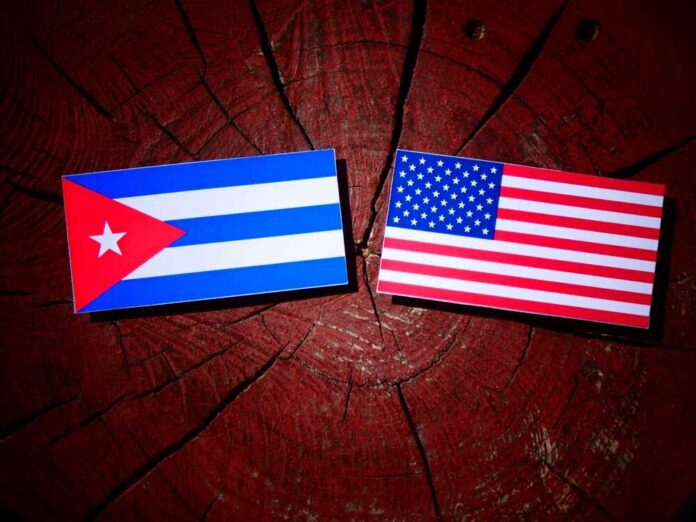
Three decades after two tiny planes fell flaming into the Florida Straits, Washington is finally aiming its legal crosshairs at Raúl Castro—and the timing tells you as much about American power as it does about Cuban guilt.
Story Snapshot
- U.S. prosecutors are preparing charges against Raúl Castro over the 1996 Brothers to the Rescue shootdown. [1][2][5]
- The case leans on long-standing evidence that Cuban jets downed two civilian planes in international airspace, killing four people. [1][3][5]
- Fidel and Raúl Castro have been linked to the order, but Raúl’s personal role has never been tested in a courtroom. [1][3]
- The Trump administration’s broader pressure campaign on Cuba raises hard questions about justice, politics, and timing. [1][2][6]
From Humanitarian Flights To Fireballs Over The Florida Straits
On a clear Saturday in February 1996, the Miami-based group Brothers to the Rescue launched small civilian planes to search for Cuban rafters adrift between Havana and Florida.
Reports across decades agree on what happened next: Cuban military jets intercepted two of the aircraft and shot them out of the sky over the Florida Straits, killing all four men aboard. [1][3][5]
Those names—Alejandre, de la Peña, Costa, Morales—became rallying cries in South Florida and symbols of impunity in Havana. [3]
Trump administration prepares to seek Raul Castro indictment as it pressures Cuba, AP sources say https://t.co/uEz3A3Jcmb
— The Washington Times (@WashTimes) May 16, 2026
American courts did not treat the incident as an unfortunate misunderstanding. A federal judge in Miami later concluded that the Cuban government “murdered four human beings in international airspace,” awarding the families a landmark wrongful-death judgment that ran to 187 million dollars. [3]
Washington also authorized the transfer of tens of millions from frozen Cuban assets to those families, a financial penalty that carried a moral verdict: this was not a fog-of-war tragedy; it was criminal state violence, dressed up as border defense. [3]
How Responsibility Climbed The Ladder To The Castro Brothers
The legal story now circling Raúl Castro started with his older brother. Months after the shootdown, Fidel Castro sat for a U.S. television interview and did something dictators almost never do: he publicly shouldered responsibility.
He said he ordered that the Air Force not allow these flights to continue and that those who carried out the shootdown did so knowing they were fulfilling that directive. [3]
That admission helped anchor the idea that this was not a rogue pilot’s mistake but a top-level decision by the Cuban state. [3]
Later reporting pushed the chain of accountability one step further. As defense minister at the time, Raúl Castro oversaw Cuba’s armed forces and was described by sources and commentators as sharing responsibility for the decision to shoot down the planes. [1][3]
Some accounts say both brothers accepted responsibility for the order, even if only Fidel went on camera in 1996. [3] Intelligence intercepts and audio described in news coverage allegedly captured Cuban pilots exulting after the kill, and one local report even speaks of a recording near exile leader José Basulto’s home that supporters claim ties the command decision to Castro himself. [3][4]
Why A 30-Year-Old Shootdown Is Back On Washington’s Front Burner
The obvious question for any sensible reader is: why now? The same shootdown, the same victims, the same Cuban regime—yet for thirty years Washington stopped short of criminally charging Raúl Castro.
Today, reports say the Department of Justice is preparing an indictment in Miami that would directly accuse the former Cuban president of crimes tied to those deaths. [1][2][5][6]
Prosecutors appear to rely on familiar terrain: American victims, an attack in international airspace, and evidence already strong enough to have convinced a federal judge in the civil case. [1][3]
Timing, however, is where law and politics collide. The push comes as a Trump administration already hostile to Havana has squeezed Cuba with tighter sanctions, energy restrictions, and diplomatic isolation. [1][2][6]
South Florida lawmakers and exile groups—crucial constituencies in American elections—have loudly demanded renewed criminal action, portraying the case as unfinished business from the Clinton-era response to the shootdown. [1][3]
From a law-and-order perspective, holding foreign strongmen accountable for killing Americans is overdue; yet that same perspective also demands proof that the courtroom is not merely an extension of the campaign trail.
What The Evidence Can Prove—And What It Still Cannot
The record clearly supports three points: Cuban jets destroyed two civilian planes; four people died; and the Cuban government has never denied shooting them down, only argued that the aircraft violated its airspace. [2][3][5]
The civil judgment, Fidel’s televised remarks, and years of media and exile documentation create a thick file on state-level responsibility. [1][3][6] That is why most Americans who follow the case instinctively see the shootdown as a wrongful killing, not a legitimate act of self-defense, regardless of Havana’s rhetoric. [1][3]
By JOSHUA GOODMAN, ALANNA DURKIN RICHER and ERIC TUCKER MIAMI (AP) — The Justice Department is preparing to seek an indictment against former Cuban President Raúl Castro, three people familiar with the matter told The Associated Press on Frid… https://t.co/VEJAMjmw8W
— Capital Gazette (@capgaznews) May 15, 2026
The gap lies at the point where symbolism becomes indictment. Publicly available records do not yet show a signed order from Raúl Castro, a transcript of him directing the attack, or sworn testimony from Cuban officers placing him in the real-time chain of command. [1][3][5]
Most accounts rely on unnamed officials, intelligence summaries, or the logic of his position as defense minister. [1][5][6] That may be enough to draft an indictment, but a serious American standard of justice insists that a trial verdict rest on evidence the defense can confront, not on leaks and assumptions about how dictatorships operate.
Why This Case Matters Far Beyond Cuba
This looming indictment sits at the intersection of justice, deterrence, and political theater. For families who watched their loved ones vanish into the sea in 1996, a criminal case against Raúl Castro would mark the first time an individual, not just an abstract regime, faces consequences in a U.S. courtroom. [1][3]
For future foreign leaders eyeing American citizens as expendable pawns, a successful prosecution would send a simple message: time and distance do not erase murder when Americans are the victims. [1][3][6]
Yet history warns that late-stage prosecutions tied to broader geopolitical campaigns always risk looking selective. Washington has overlooked plenty of friendly regimes with blood on their hands.
When it moves aggressively against an aging communist strongman just as it leans on Havana for leverage in Latin America, skeptics will see strategy as much as morality. [6]
The real test will not be whether Raúl Castro is popular or reviled; it will be whether the government can walk into a Miami courtroom and prove, with real evidence, that the man who once ran Cuba’s military also personally owned the order that brought down those planes.
Sources:
[1] Web – DOJ Seeks Raúl Castro Indictment Over 1996 Brothers to the …
[2] Web – U.S. reportedly preparing criminal charges against Raúl Castro over …
[3] Web – Raúl Castro’s indictment expected to be unsealed in Miami
[4] YouTube – DOJ seeks to indict Raúl Castro in 1996 Brothers to the Rescue …
[5] Web – US Considers Indicting Former Cuban President Raúl Castro Over …
[6] Web – Shoot-Down of the Brothers to the Rescue Planes – House.gov