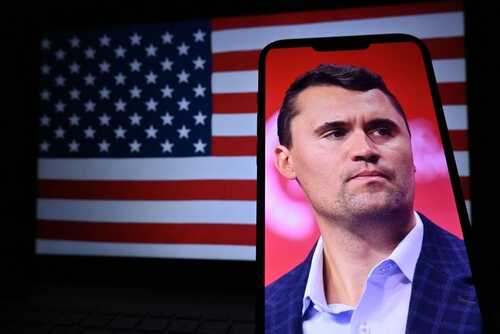
Arizona Democrats just blocked a high-profile tribute to the late conservative activist Charlie Kirk—by calling a memorial “too political.”
Quick Take
- Arizona Gov. Katie Hobbs vetoed a bill that would have renamed Loop 202 in the Phoenix area for Charlie Kirk, who was assassinated in 2025.
- Republican lawmakers say the veto turns public recognition into a test of political alignment rather than a measure of contribution.
- Hobbs argues the bill bypassed Arizona’s standard, nonpartisan naming process handled by the State Board on Geographic and Historic Names.
- The veto followed an earlier Hobbs veto of a Charlie Kirk-themed specialty license plate bill intended to support a charity run by Kirk’s widow.
Hobbs Rejects Loop 202 Rename After GOP Push
Gov. Katie Hobbs vetoed legislation on March 27 that would have renamed Loop 202—described as a 78-mile freeway encircling much of the Phoenix-area metro—for conservative activist and Turning Point USA founder Charlie Kirk.
Arizona Republicans passed the measure largely along party lines, framing it as a posthumous honor after Kirk’s 2025 assassination. The bill would have directed the Arizona Department of Transportation to install the new signs, making the change immediate and mandatory.
Hobbs’ veto message focused on process rather than Kirk’s biography. She argued the legislation “inserts politics into a nonpartisan function,” pointing to the Arizona State Board on Geographic and Historic Names as the usual venue for evaluating and approving commemorative names.
That procedural objection matters because the bill did not simply request consideration; it bypassed the board and ordered the name change outright. The practical outcome is straightforward: Loop 202 keeps its current name, and no new signage will go up.
Why the Naming Process Became the Central Fight
Arizona has a history of honoring prominent figures through roadway designations, but this fight turned on how those honors are granted. The governor’s position is that the state’s naming board exists to keep decisions consistent and insulated from election-cycle politics.
Republican legislators took the opposite view: the Legislature has authority to act, and Kirk’s influence warranted recognition without running a slower administrative gauntlet. The sources available do not include independent transportation or governance experts weighing in on which approach is preferable.
JUST IN: Gov. Katie Hobbs has vetoed a bill that aimed to rename Loop 202 after Charlie Kirk. https://t.co/K2x5inEvoq pic.twitter.com/yRsRMIroYG
— ABC15 Arizona (@abc15) March 28, 2026
Senate President Warren Petersen, the bill’s sponsor, responded publicly the day after the veto and argued the governor’s decision effectively makes memorialization contingent on ideology. P
etersen said the veto signals that “recognition” now depends on “political alignment, not contribution,” casting Hobbs—not the bill—as the actor injecting politics into a tradition of public remembrance. No reports in the provided research describe an override attempt or confirm whether lawmakers will try again through the naming board instead of legislation.
A Second Veto in Weeks Raises Stakes for Supporters
The highway veto did not happen in a vacuum. Roughly three weeks earlier, Hobbs vetoed a separate proposal tied to Kirk: a specialty license plate featuring his image that supporters said would fund a charity associated with Kirk’s widow, Erika Kirk.
Together, the two vetoes have created a clearer pattern for Arizona conservatives: symbolic and fundraising efforts connected to Kirk are running into firm resistance from the Democrat governor’s office, even when Republicans can pass bills through the GOP-led Legislature.
Supporters of the measures argue the dispute is bigger than a sign on a freeway. Kirk built Turning Point USA in Arizona and became nationally known for campus activism and public debate—work that made him a hero to many on the right and a lightning rod to political opponents.
With the research noting he was assassinated in 2025 at an event at Utah Valley University, conservatives see these tributes as both remembrance and a statement against political violence. Hobbs’ vetoes ensure that statement will not come from state branding or state-sanctioned memorial markers, at least for now.
What It Signals for Red-State Tributes and Partisan Gridlock
The immediate effect on drivers is minimal, and the economic impact appears limited largely to signage costs that will not be incurred. Politically, the fight highlights how divided government can turn even ceremonial acts into hardball conflict: a Republican Legislature can pass bills, but a Democrat governor can stop them with a veto.
The long-term impact is less certain. If lawmakers retreat to the naming board process, the board could become the new battleground; if they continue legislating mandates, vetoes may become the norm.
Similar debates are playing out elsewhere, including Florida, where Republican lawmakers advanced measures to name roads for Kirk and for President Donald J. Trump, with action pending from Gov. Ron DeSantis at the time of reporting.
That parallel matters because it shows the broader national trend: conservatives are using public memorials and place names to mark cultural and political identity, while Democrats increasingly challenge those moves as “politicizing” public space.
The Arizona dispute offers a clear test case of how quickly that argument can halt a tribute—even after a violent, widely reported death.
Sources:
Charlie Kirk highway got vetoed in Arizona. Elected officials are citing politics.
Arizona Gov. Hobbs vetoes highway name change for Charlie Kirk
Gov. Katie Hobbs vetoes bill to name Loop 202 after Charlie Kirk
Charlie Kirk highway got vetoed in Arizona. Elected officials are citing politics.