
She says she survived a school shooting by playing dead after a point-blank blast nearly severed her hand—and that single choice may have saved children.
Story Snapshot
- Teacher Becky Drury says the gunman shot her at close range before she could lock the door.
- She describes a nearly severed left hand and a severe injury to her other arm.
- News reports confirm she is 54 and was hospitalized with serious but survivable wounds.
- Her statement rejects reports that credited her with tackling or throwing a phone.
A first-person account from the classroom doorway
Becky Drury says she turned to shut her classroom door and faced the gunman already there. She says he fired at close range and she fell. She says she decided to lie still and pretend to be dead so he would not shoot her again. Her written statement, released through a family friend on October 21, gives a precise, simple story: no time to act, a life-or-death choice, then silence on the floor.
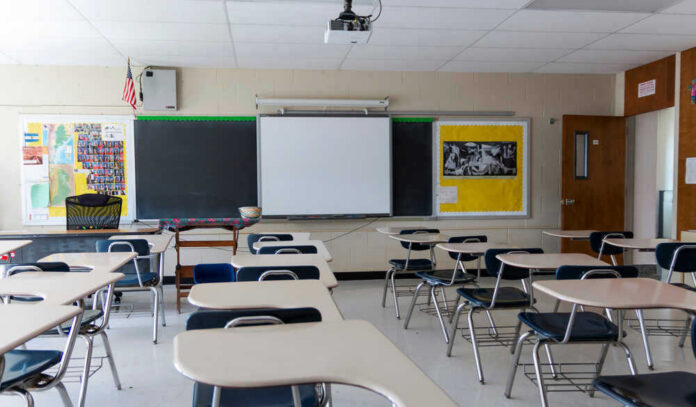
The account places the shooting in a special education classroom at Silver Rail Elementary in Bend, Oregon. Drury describes the instant shock of the wound and the loss of function that followed. She says her left hand was almost completely severed. She says her other arm was also badly hurt, making any attempt to grab, throw, or fight impossible. The words read like field notes written in pain. The picture is clear: she could not move; she could only wait.
Hospital records and age confirm the injuries and status.
News organizations reported that Drury, 54, suffered serious but not life-threatening gunshot injuries and was treated at St. Charles Medical Center. The Associated Press reported wounds to her left hand and right arm consistent with her statement, which helps anchor the timeline and medical facts. The match between her description and those early reports narrows the gap between memory and record and supports the core details of her survival.
Her words also address a fast-moving rumor mill. Drury says some reports described a teacher who threw a cellphone or tackled the shooter. She says that was not her. She says she had no chance to act before the shot dropped her. Readers recognize this pattern. In chaos, people mix stories, blend heroes, and seek clean arcs. Her statement attempts to pull her name out of that swirl and set it down in the hard place where she actually lay.
How a survival choice fits real-world training
Active shooter guidance for civilians often boils down to run, hide, or fight. Those words suggest a ladder of options. Real life scrambles the ladder. Research on school and office attacks finds that layout, timing, and wounds often decide which choice exists at all. When a gunman stands at your threshold and disables your arms in one blast, “hide” may shrink to “do not move, do not breathe loud, do not draw a second shot”.
That picture aligns with what teachers report after drills and incidents. People do not respond the same way under fire. Many variables decide the next move: door hardware, line of sight, distance, alarms, and who else is in the room. Training helps, but wounds and seconds rule the day. In Drury’s case, the next move was to stop moving. That is not giving up. That is choosing the only cover left when your body can no longer run or fight.
Sorting credit without losing truth
Police and press also reported acts by others on campus, including a civilian who intervened. Those reports sparked fast headlines about heroism. Drury does not challenge the idea that others acted. She separates her role from that thread. She draws a line between what she did and what others did. That boundary matters. Public safety depends on accurate after-action notes, not a single story that tries to make every witness the same.
Becky Drury, a 54-year-old teacher at the Bend, Oregon school where a gunman shot and killed three students and a teacher last week, said she tried to close the door of her classroom, but the shooter was already there.
In a statement, Drury said she suffered severe injuries and… pic.twitter.com/bCrqAUvez7
— CBS Mornings (@CBSMornings) October 22, 2026
Her statement also gives parents something vital: a concrete view of what “protecting kids” can look like when the attacker owns the first second. Sometimes protection is bold action. Sometimes it is buying time by going still. Both can be brave. Both can save lives.
Sources:
cbsnews.com, apnews.com, nytimes.com