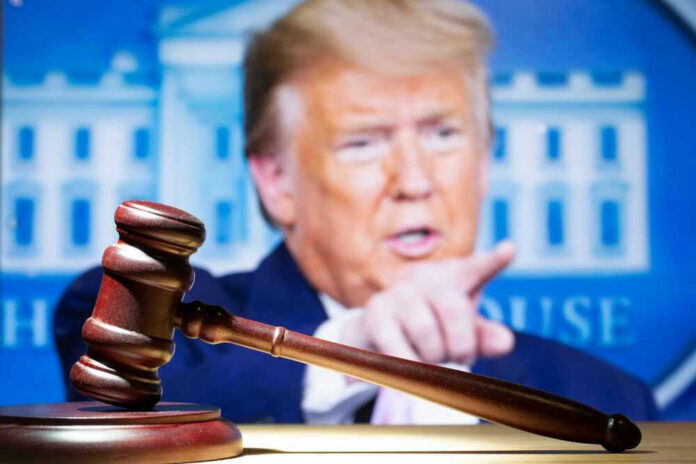
President Trump’s push to sharply curb mail-in voting is setting up a collision between election-security demands and the Constitution’s state-run election system.
Story Snapshot
- Trump is urging Republicans to restrict most mail balloting and is signaling he may act through an executive order.
- The White House is tying the push to broader election measures such as voter ID and proof-of-citizenship proposals.
- Some GOP lawmakers and strategists warn that attacking mail voting can backfire by discouraging reliable Republican voters.
- Legal analysts say sweeping federal limits would face major hurdles because states control the “times, places and manner” of elections.
Trump’s new pressure campaign targets mail ballots ahead of 2026
President Trump has escalated his message to congressional Republicans: restrict most mail-in voting and move election policy toward paper ballots and tougher verification. Reporting on his recent comments and posts describes Trump urging limits that would leave mail voting mainly for illness, disability, military service, or travel.
The timing is political as well as procedural, landing as Republicans look toward the 2026 midterms and internal debates over the best turnout strategy.
Trump’s argument is rooted in distrust of broad mail voting, which expanded dramatically during COVID-era changes and then persisted in many states. The research summary also notes a tension Republicans lived through in 2024: party efforts and outside spending encouraged GOP voters to use mail ballots even while Trump continued to criticize the method.
That split matters because millions of ballots were cast by mail nationwide, making any abrupt shift a practical and political risk.
What the legislation does—and why the Senate remains the choke point
On Capitol Hill, the fight is partly about the SAVE America Act, which has been framed as an election-integrity package emphasizing voter ID and proof of citizenship. The research indicates the bill has cleared the House but remains stalled in the Senate, where Republicans hold a majority yet still face the 60-vote cloture threshold.
Senate leadership has signaled resistance to changing filibuster rules, limiting the odds of quick passage.
President Trump says he will not sign any bills into law until the SAVE America Act is passed. pic.twitter.com/C7p26CBLhX
— Political Polls (@PpollingNumbers) March 8, 2026
Other proposals referenced in the research would go further on mail voting, including restrictions on universal vote-by-mail and rules about when mailed ballots can be received and counted.
Those provisions highlight the core tradeoff lawmakers face: tightening procedures to reduce opportunities for error and abuse versus ensuring access for legitimate voters who depend on mail service, including military families and rural communities. With the midterms approaching, the legislative calendar is unforgiving.
The constitutional guardrails: states run elections, and courts will police overreach
Even with unified government, broad federal restrictions collide with the Constitution’s basic structure for elections. The research points to Article I, Section 4, which places primary authority for election administration with states while allowing Congress a role in regulating federal elections.
Legal commentary cited in the research suggests a president cannot simply end mail voting nationwide by executive order, meaning any sweeping attempt would likely invite immediate litigation and uneven compliance.
The White House has also issued election-integrity directives that signal an administrative approach alongside legislation. The available research does not fully detail how far those actions reach in practice, but it does emphasize that executive-driven changes can be “constitutionally shaky” if they effectively commandeer state election systems.
For conservative voters who care about limited government, the key is pursuing integrity reforms that hold up in court rather than creating chaos that judges can reverse.
Political reality check: GOP unity isn’t automatic, and mail voting cuts both ways
Republican stakeholders are not monolithic on mail balloting. The research describes MAGA-aligned voices echoing Trump’s fraud concerns, while other GOP lawmakers highlight that mail voting is integral in certain states—Utah is a prominent example cited for its rural geography and reliance on mailed ballots.
Strategists also warn that years of attacking mail voting have trained some Republican voters to avoid a method the party previously used to compete effectively in places like Arizona.
The research also underscores a central limitation: multiple sources summarized here say there is not clear evidence that mail voting inherently favors Democrats. That makes a blanket ban-like approach a gamble if the goal is purely political advantage.
For voters focused on clean elections, the most durable path is likely targeted safeguards—strong ID rules where constitutional, chain-of-custody standards, and transparent auditing—implemented in ways that states can administer without disenfranchising lawful voters.
Sources:
Trump Pushes GOP on Voting Bill, Demanding an End to Most Mail Balloting
SAVE America Act, Trump State of the Union, Congress, elections and mail ballots
New GOP anti-voting bill may be the most dangerous attack on voting rights ever
Preserving and Protecting the Integrity of American Elections