

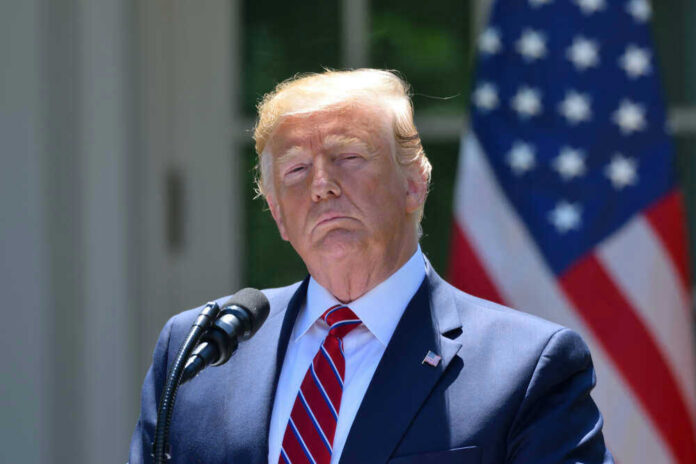
President Donald Trump’s call to induct Roger Clemens into the Baseball Hall of Fame has ignited a fierce debate over fairness, legacy, and the dangers of letting unproven allegations override achievement.
Story Snapshot
- President Trump publicly urges the Hall of Fame to induct Roger Clemens, challenging years of exclusion based on unproven PED allegations.
- Clemens, one of baseball’s most decorated pitchers, was never convicted nor tested positive, yet remains barred due to the BBWAA’s interpretation of character standards.
- The debate echoes broader conservative frustrations with institutions that ignore facts, undermine due process, and perpetuate double standards.
- Trump’s intervention spotlights ongoing cultural battles over merit, redemption, and the politicization of American traditions.
Trump’s Advocacy for Clemens: A Stand Against Institutional Double Standards
President Trump took to Truth Social, demanding Roger Clemens’ induction into the National Baseball Hall of Fame. Trump’s statement came after a high-profile golf outing with Clemens and his son, where he lauded Clemens’ legendary pitching career and pointedly criticized the ongoing exclusion of players based on unproven allegations.
By comparing Clemens’ case to that of Pete Rose, Trump drew a direct line between political correctness in sports and the broader erosion of American meritocracy.
His remarks have reignited the national conversation about how institutions wield the power to rewrite history—often at the expense of fairness and common sense.
For many conservatives, Trump’s advocacy is more than just sports talk. It is a protest against the leftist tendencies that have crept into every corner of American life, from government to the national pastime.
The Baseball Writers’ Association of America (BBWAA), which controls Hall of Fame voting, continues to exclude Clemens despite his seven Cy Young Awards, two World Series titles, and 354 career wins.
The sole justification has been allegations of performance-enhancing drug (PED) use—allegations that have never been proven in court or by any positive test.
Trump’s push for Clemens’ recognition calls out the dangerous precedent of guilt by association, a tactic all too familiar to conservatives who have watched similar methods used to silence political opponents or erase historical accomplishments.
Hall of Fame Politics: The Weaponization of Allegations Over Evidence
Roger Clemens’ career exemplifies the American values of excellence, perseverance, and achievement. Yet his legacy is tarnished not by evidence, but by the BBWAA’s embrace of a “character clause” that has been inconsistently applied and weaponized against certain players.
Clemens was named in the 2007 Mitchell Report, but he vehemently denied PED use and was acquitted of perjury and obstruction charges in 2012.
No positive test or conviction has ever surfaced. Still, from 2013 to 2022, Clemens repeatedly fell short of the 75% Hall of Fame vote threshold, with writers citing suspicion alone as justification for exclusion.
This mirrors the treatment of Pete Rose, permanently banned for gambling despite being baseball’s all-time hits leader, and reflects a troubling trend where mere allegations—not facts or fair process—determine reputations and legacies.
Conservatives see this as emblematic of broader societal problems: the rise of cancel culture, the disregard for due process, and the erosion of time-honored traditions.
If a decorated athlete like Clemens can be sidelined based on rumors, what hope is there for ordinary Americans facing similar tactics in politics, education, or business?
Trump’s involvement shines a spotlight on how institutions once trusted to uphold standards have instead become vehicles for enforcing ideological conformity, often at the expense of truth and justice.
The Broader Battle: Tradition, Redemption, and the Fight for American Values
The Clemens controversy is not just about baseball stats or Hall of Fame plaques—it’s about the soul of American culture. Trump’s willingness to champion Clemens reflects a broader conservative desire to restore fairness, forgive past mistakes, and defend the principle that individuals are innocent until proven guilty.
The Hall of Fame’s refusal to induct Clemens, despite his legal acquittal and unmatched achievements, signals a dangerous shift: institutions that once celebrated greatness now police it according to ever-shifting moral and political standards.
This debate has far-reaching consequences. In the short term, Trump’s call has reignited public scrutiny of Hall of Fame practices and raised questions about the future of other PED-era stars.
Long-term, it may pressure the institution to reconsider its stance or risk further alienation from the millions of Americans who value merit, redemption, and the honest telling of history.
For conservatives, the Clemens case is yet another reminder of why vigilance is needed to defend foundational values—on the field, in the halls of power, and everywhere the American spirit endures.
Trump says Roger Clemens should be in National Baseball Hall of Fame https://t.co/snPzEkacb9
— Just the News (@JustTheNews) August 24, 2025
Ultimately, the fight over Roger Clemens’ legacy is about more than baseball. It is a test of whether American institutions will uphold the values of fairness, evidence, and redemption—or continue down a path where ideology trumps everything else.
Trump’s stand for Clemens is a stand for every American who believes that achievements should matter, that justice should be blind, and that our traditions are worth defending from the relentless march of politicized agendas.
Sources:
Roger Clemens – The Baseball Scholar
Roger Clemens records, accolades on Hall of Fame table – MLB.com
Roger Clemens Player Page – MLB.com
Roger Clemens career stats – StatMuse