

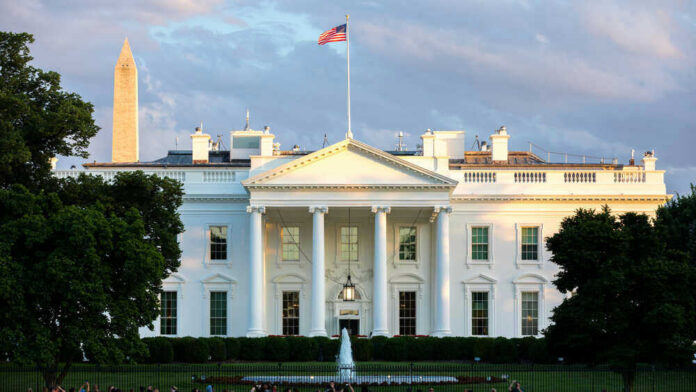
The White House is trying to shut down a political firestorm before it turns into a constitutional clash over pardons, subpoenas, and accountability in the Epstein-Maxwell saga.
See the videos below.
Quick Take
- Press Secretary Karoline Leavitt said a Ghislaine Maxwell pardon is “not a priority” and not something President Trump is “considering or thinking about.”
- Maxwell’s attorney is pressing for immunity or clemency before she will cooperate with a GOP-led House Oversight deposition set for August 11.
- Trump acknowledged he has the authority to pardon Maxwell but said no request had been made.
- Deputy Attorney General Todd Blanche’s prior prison meetings with Maxwell are resurfacing as critics question optics and potential conflicts.
Leavitt’s message: the administration won’t chase Epstein-Maxwell speculation
Karoline Leavitt used the February 10, 2026, White House briefing to keep distance between President Trump and the growing speculation around Ghislaine Maxwell’s clemency.
Leavitt told reporters the topic was “not a priority” and said Trump had previously indicated it is not something he is considering. Leavitt also did not confirm a reported 2006 Trump call tied to the Palm Beach Epstein investigation, offering only broader context about Trump’s past statements.
Leavitt’s approach matters because she did not issue an absolute “never,” even as she insisted there were no recent discussions. That leaves a narrow gap that fuels headlines and partisan narratives.
The sources provided indicate the question is being kept alive by Maxwell’s legal strategy and congressional pressure, not by any announced White House plan. With the country focused on inflation hangovers, border enforcement, and executive-branch restraint, the administration appears intent on preventing an old scandal from hijacking its agenda.
Maxwell’s legal demands collide with House Oversight’s subpoena power
Ghislaine Maxwell, convicted in 2021 for recruiting and grooming underage girls for Jeffrey Epstein’s trafficking operation, is serving a 20-year federal sentence in Tallahassee. House Oversight, led by Republicans, has subpoenaed Maxwell for an August 11 deposition tied to the handling of the Epstein case.
According to reporting cited in the research, Maxwell’s lawyer has pushed back, signaling she will not comply under the committee’s terms unless she receives immunity or clemency, pointing to ongoing appeals.
Q: “On Ghislaine Maxwell, is the president going to rule out a pardon for her?”
Leavitt: “Again, this is not something I've discussed with the president recently because frankly it's not a priority.” pic.twitter.com/i88W8shoL4
— The Bulwark (@BulwarkOnline) February 10, 2026
That standoff highlights a practical reality: Congress can subpoena testimony, but lawyers often steer clients away from statements that could create new legal exposure. The research indicates that Maxwell’s counsel argues that without protections, any deposition risks compounding her jeopardy while appeals continue up to the Supreme Court level.
From a constitutional perspective, the dispute sits at a tense intersection of congressional oversight and individual rights against self-incrimination. The public, meanwhile, is left with another high-profile delay instead of clean answers.
Trump’s pardon authority is real, but the political cost would be immediate
President Trump told reporters he is “allowed” to pardon Maxwell, while also suggesting no request had been made. That statement aligns with the constitutional power of clemency and with Leavitt’s insistence that it is not a current priority.
The research also reflects sharp warnings about optics: a pardon in a case involving sex trafficking would create instant backlash, including from victims’ advocates who have publicly opposed any reduction in Maxwell’s punishment.
Based on the materials provided, the strongest confirmed facts are the administration’s public posture and Maxwell’s conditional posture. Claims that a pardon would be used for “silence,” or that it would serve a political quid pro quo, appear in commentary but are not supported by direct evidence in the cited reporting.
Still, conservatives wary of government overreach and politicized justice can recognize the stakes: once clemency becomes a bargaining chip in a congressional fight, confidence in equal justice under law erodes, regardless of which party benefits.
Blanche’s prior meetings and DOJ credibility keep the story alive
Another detail resurfacing in the research is that Deputy Attorney General Todd Blanche—who previously served as Trump’s lawyer—met with Maxwell in prison in July 2024 to discuss Epstein-related matters. Critics quoted in the research have described the situation as unusual, raising questions about optics and perceived conflicts.
Separately, the research notes that the Justice Department previously cited Maxwell’s “significant pattern of dishonest conduct,” which is relevant when evaluating the reliability of any future cooperation claims.
Leavitt: Pardoning Maxwell 'Not a Priority' for Trump https://t.co/89Fdjoqeuq
— ConservativeLibrarian (@ConserLibrarian) February 10, 2026
The bottom line is that the public is watching three institutions collide: Congress seeking testimony, a defendant seeking leverage, and an executive branch trying to keep the issue from dominating national priorities.
The available reporting does not establish that a pardon is imminent, only that the topic is being used as pressure in a broader oversight fight. If lawmakers want clarity, the cleanest outcome described by critics in the research is transparency through lawful releases and testimony—without shortcuts that weaken public trust.
Sources:
trump-pardon-ghislaine-maxwell-jeffrey-epstein
ghislaine-maxwell-congressional-deposition-immunity-pardon-conditions