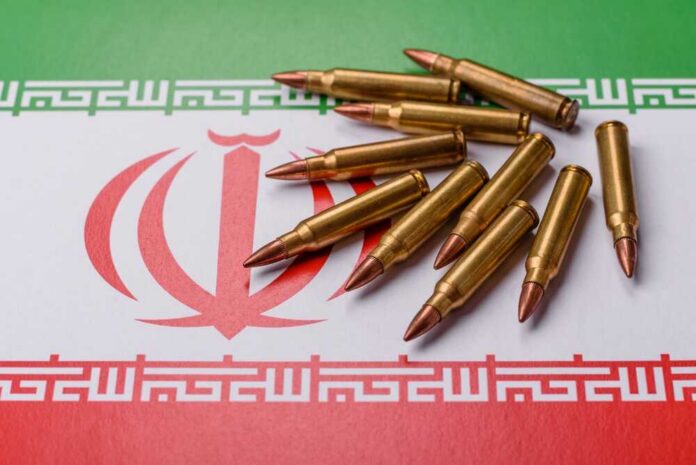
Iran is demanding cryptocurrency payments from oil tankers transiting the Strait of Hormuz, a provocative move that bypasses the US dollar, threatens global energy markets, and could generate billions in sanctions-evading revenue for the regime.
Story Snapshot
- Iran’s Oil Exporters’ Union announced a $1-per-barrel toll payable in cryptocurrency for tankers crossing the Strait of Hormuz during a fragile ceasefire period
- The unprecedented demand could generate $7 billion to $50 billion annually while forcing ships into risky routes near Iranian waters
- This crypto-based toll scheme allows Iran to circumvent US sanctions and traditional banking systems, undermining dollar dominance in global oil trade
- The Strait handles roughly 20-30% of the world’s oil supply, making Iran’s control over this chokepoint a critical threat to energy security
Iran Weaponizes Critical Oil Chokepoint
Hamid Hosseini, spokesperson for Iran’s Oil, Gas and Petrochemical Products Exporters’ Union, announced that shipping companies must pay a $1-per-barrel toll in cryptocurrency for oil tankers passing through the Strait of Hormuz.
The regime justified the demand by claiming it needed to monitor vessels for weapons transfers during a two-week ceasefire.
The Strait of Hormuz, a 21-mile-wide waterway between Iran and Oman, serves as a vital artery for global energy markets, with approximately 20 million barrels of oil passing through daily under normal conditions.
Iran is demanding that oil tankers passing through the Strait of Hormuz make toll payments in the form of cryptocurrency, including Bitcoin and stablecoins such as Tether’s USDT or the Trump family’s USD1. Vessels have been told to email Iranian authorities prior to passage… pic.twitter.com/CjMpvw8Q3X
— OSINTdefender (@sentdefender) April 9, 2026
The toll scheme represents a dramatic escalation in Iran’s long-standing efforts to assert control over the waterway. Iran has historically threatened to close the Strait during periods of heightened tension, including seizing oil tankers in 2019 amid confrontations with the United States.
This new toll structure formalizes what has been sporadic intimidation into a systematic revenue-generating mechanism. Some reports suggest Iran may layer this $1-per-barrel fee on top of a previously imposed $2 million-per-ship charge, potentially yielding up to $50 billion annually if pre-conflict traffic volumes return.
Cryptocurrency Enables Sanctions Evasion
Iran’s insistence on cryptocurrency payments reflects the regime’s strategic adaptation to international sanctions that have largely cut it off from the global banking system.
By demanding Bitcoin or other digital currencies, Iran can receive instant, untraceable payments that bypass US dollar transactions and traditional financial institutions.
This approach aligns with Iran’s documented history of using cryptocurrency to sell oil to countries like China, evading restrictions designed to pressure the regime over its nuclear program and regional aggression.
The cryptocurrency requirement poses significant compliance challenges for Western and Gulf shipping companies, who must navigate both the financial mechanics of crypto transactions and the legal risks of potentially violating sanctions.
Insurance costs for tankers transiting the strait are likely to spike given the heightened risks. Energy importers in Asia and Europe will ultimately bear these increased costs through higher oil prices, which analysts estimate could rise one to five percent if Iran successfully enforces the toll.
Ceasefire Context Raises Strategic Questions
The toll announcement occurred during what sources describe as a two-week ceasefire. Hosseini stated that Iran needs to “monitor what goes in and out” to prevent weapons transfers, suggesting the regime fears arms shipments to adversaries or opposition groups.
Iran requires tankers to use northerly routes closer to its coastline rather than southern lanes near Oman, giving Iranian naval forces greater surveillance and enforcement capability while exposing commercial vessels to potential harassment or seizure.
This maneuver tests the fragile ceasefire and raises questions about whether Western powers and Gulf states will accept Iran’s unilateral assertion of authority over international waters.
The precedent is troubling beyond immediate energy security concerns: if Iran successfully imposes cryptocurrency tolls on a critical maritime chokepoint, other nations controlling strategic waterways might attempt similar schemes.
The move also demonstrates how governments facing international pressure increasingly view digital currencies as tools to circumvent the rules-based financial order that has underpinned global commerce since World War II.
Sources:
Iran Demands Cryptocurrency Toll for Strait of Hormuz Oil Passage – Binance Square
Iran is charging $1 per barrel of oil through the Strait during ceasefire – TigerDroppings