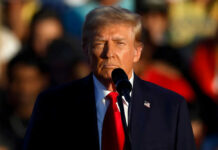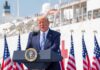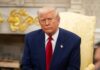

President Trump announces withdrawal of federalized National Guard troops from three Democrat-controlled cities, marking a significant retreat from federal intervention amid mounting legal challenges.
Story Highlights
- Trump orders National Guard removal from Chicago, Los Angeles, and Portland on December 31, 2025
- Justice Department simultaneously drops appeals court efforts to maintain federal control
- Legal challenges from Democrat governors force strategic federal retreat
- Control returns to state governors, ending December federalization efforts
Federal Retreat Under Legal Pressure
President Donald Trump announced via social media on Wednesday, December 31, 2025, that National Guard troops would be removed from Chicago, Los Angeles, and Portland, Oregon.
The Justice Department concurrently filed a brief with an appeals court abandoning federalization efforts amid ongoing legal challenges. This withdrawal marks a significant shift from Trump’s earlier December deployment strategy in these Democrat strongholds.
Trump says he’s dropping push for National Guard in Chicago, LA and Portland, Oregon, for now https://t.co/qaBqfNzSOF
— New York Daily News (@NYDailyNews) January 1, 2026
Timeline of Deployment and Withdrawal
National Guard troops were federalized and deployed to the three cities in early December 2025, responding to urban unrest similar to 2020 patterns. By mid-December, troops were already pulled from Los Angeles streets as legal challenges proceeded through the courts.
The December 31 announcement formalized the complete withdrawal, with governors like California’s Gavin Newsom regaining command authority over their state forces.
Constitutional Authority Challenges
The federalization relied on the Insurrection Act of 1807, which grants presidents domestic deployment authority during civil unrest. However, courts have historically limited prolonged federalizations without governor consent, particularly in cases involving sustained deployments.
Legal analysts view the Justice Department’s appeals court brief as acknowledgment of a weakened federal case, forcing the administration’s strategic retreat from these progressive strongholds.
Political Implications and State Control
Trump’s withdrawal hands Democrat governors a significant political victory, reinforcing state sovereignty arguments against federal overreach. The “for now” qualifier in Trump’s announcement suggests potential future deployments, maintaining some deterrent effect while acknowledging current legal limitations.
This precedent may influence future federal-state conflicts over law enforcement authority, particularly heading into the 2026 midterm elections where federalism debates remain contentious.
The withdrawal reduces immediate federal presence in these cities, potentially allowing local unrest to resurge without federal backup support.
Economic impacts remain minimal regarding operational costs, but the broader implications for executive authority and constitutional governance present ongoing concerns for conservatives who support strong federal law enforcement capabilities during civil disorder.