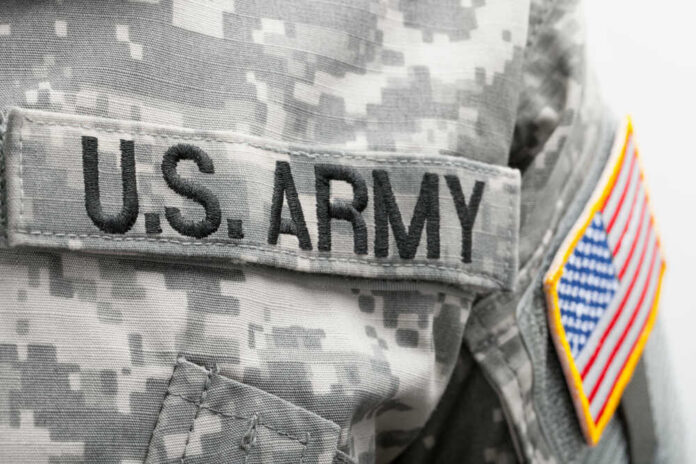
The Army just opened the door to 42-year-old recruits—an unmistakable sign Washington is planning for a longer, heavier fight even as Americans recoil from another open-ended war.
Story Snapshot
- The U.S. Army updated Army Regulation 601–210 to raise the maximum enlistment age from 34 to 42, effective April 20, 2026.
- The change applies to the Regular Army, Army Reserve, and Army National Guard, including both new recruits and prior-service applicants.
- Army officials framed the move as aligning with Defense Department standards, not as an emergency response to missed recruiting goals.
- The revised regulation also eases entry for some applicants with a single marijuana possession or paraphernalia conviction by removing the waiver requirement.
What the Army Changed—and When It Starts
The Army released an expedited update to Army Regulation 601–210, raising the maximum enlistment age from 34 to 42. Major military outlets reported the change on March 24, with the policy set to take effect on April 20, 2026.
The new limit covers enlistment in the Regular Army, the Army Reserve, and the Army National Guard, expanding eligibility for older first-time applicants and many prior-service candidates.
Those in their late 30s and early 40s can now join the U.S. Army.
The Army increased its maximum enlistment age to 42 this month, bringing its accession policy closer in line with most of the United States’ other military services.
Individuals up to 42 with or without prior… pic.twitter.com/rrHToFfDCN
— Stars and Stripes (@starsandstripes) March 24, 2026
The timing matters because this is a permanent reversal of the post–Iraq/Afghanistan drawdown era. The Army previously lowered its cap after major overseas operations slowed, and now it is moving back to the 42-year ceiling used during earlier wartime recruiting pushes.
The regulation also preserves top-down discretion: Army leadership retains authority to direct exceptions, meaning policy can still be tightened or broadened depending on operational needs.
Why Raise the Age During “Solid” Recruiting?
Stars and Stripes reported that the Army has recently reached or surpassed recruiting goals and is on track for its 2026 aims, which makes the expedited nature of the update stand out.
An Army spokesperson described the change as a step to better align the service with Defense Department standards. In plain English, the Army is harmonizing rules across the services so recruiters are not competing with one hand tied behind their backs.
Across the force, the upper age limits already run higher than the Army’s previous cap. The Air Force, Space Force, and Coast Guard accept recruits up to age 42, while the Navy goes to 41 and the Marine Corps remains far lower.
When eligibility rules differ, older applicants who want to serve can simply pick a different uniform. Raising the cap reduces that leakage, and it does so without publicly announcing lower standards on fitness, testing, or education.
The Older-Recruit Argument: Better Retention, Fewer Washouts
RAND analysts have been pointing the Army toward older recruits for years. A 2022 RAND analysis found recruits ages 25 to 35 were about 15% less likely to wash out of initial entry training than younger recruits and about 6% more likely to reenlist after their first contract.
RAND also captured what many recruiters say privately: older applicants often show up more focused, more motivated, and able to ship faster because their decisions are settled.
That doesn’t guarantee the Army will suddenly add a huge number of new soldiers, and even supportive evidence suggests modest gains. Air Force Times reported that when the Air Force raised its own maximum age from 39 to 42 in 2023, officials projected roughly 50 additional recruits per year.
That estimate underscores what’s realistic: raising the age is not a magic lever, but it is a low-drama way to widen the pool while preserving a preference for mature, trainable candidates.
Marijuana Waivers, Standards, and the Culture Question
The same regulation package also changed how the Army handles certain low-level drug-related histories. Stars and Stripes reported that the update allows recruits with a single marijuana or drug paraphernalia possession conviction to enlist without a waiver, whereas prior policy technically barred such applicants.
Supporters will argue this is a practical adjustment to the legal landscape across states; critics will argue standards should tighten in wartime, not loosen.
Based on the available reporting, the Army has not presented public data showing how many additional recruits will come specifically from the marijuana-waiver change, or how that intersects with readiness outcomes.
What is clear is that the policy choices reflect a balancing act: expanding eligibility without saying the force is in crisis. For voters already weary of “forever war” thinking, even administrative tweaks can feel like quiet preparation for a conflict that outlasts slogans.
What It Means for Families Watching the Iran War
In 2026, with the U.S. at war with Iran and a Republican administration under pressure to show strength without repeating past regime-change mistakes, recruiting policy is not just paperwork.
Expanding the eligible age band to 42 invites more mid-career Americans—often with spouses and kids—into the pipeline. It also offers a structured path for prior-service personnel to return. The Army notes that a 42-year-old entrant can still serve a full 20-year career before the retirement age of 62.
You don't do this unless you are planning something BIG!
Army raises maximum enlistment age to 42!
This with huge numbers in recruiting!This fiscal year, all active-duty services made mission. Most reserve components also met their mission goals, with the exception of the Army…
— Joshua T. Hosler (@JoshuaHosler) March 25, 2026
For a conservative audience, the constitutional and cultural stakes aren’t abstract. Wartime urgency often brings bigger budgets, more federal direction, and more pressure on families already squeezed by higher energy costs and inflation.
This age-limit change doesn’t prove a draft is coming, and no source here claims that. But it does confirm the government is widening the manpower funnel—an unmistakable move when the country is already asking what “winning” looks like, and how long the bill comes due.
Sources:
Army Raises Maximum Enlistment Age to 42 Under New Regulation, Document Shows
Army raises enlistment age to 42, eases marijuana waiver requirement
Air Force, Space Force raise max enlistment age to 42