
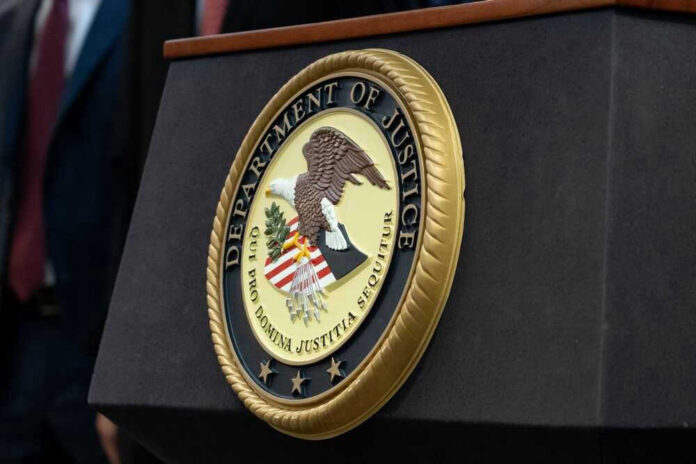
Federal prosecutors just sent a blunt message that targeting a Sunday worship service for a political spectacle can come with real consequences.
Quick Take
- The DOJ unsealed a superseding indictment charging 30 additional people in the January disruption of a Cities Church service in St. Paul, bringing the total to 39 defendants.
- Prosecutors are using two civil-rights counts, including a misdemeanor under the FACE Act and a felony conspiracy charge tied to interference with religious rights.
- The protest involved coordinated entry during service, aisle and seat occupation, and chanting tied to the death of Renee Good earlier in January.
- The case tests a novel legal theory: applying a law best known for abortion-clinic access cases to a house-of-worship disruption.
A Coordinated Disruption Inside a Church Service
Federal filings describe an incident in which anti-ICE activists entered Cities Church in St. Paul in coordinated waves during a Sunday service.
Authorities say the group took seats and blocked aisles while chanting slogans, including “Justice for Renee Good,” referring to a woman fatally shot by a federal agent earlier that month in Minneapolis.
The church became a target because a pastor also serves as the acting director of the St. Paul ICE field office.
The superseding indictment was unsealed on February 27 and added 30 defendants, bringing the total to 39. Reports differed slightly on the number of arrests after the new indictment, with accounts citing 25 or 26 arrests.
It included people arrested outside Minnesota, such as in North Dakota and New York. Twenty-one defendants made initial appearances in federal court in St. Paul during a hearing that lasted roughly 3.5 hours.
The Two Charges—and Why the FACE Act Is the Flashpoint
All defendants face the same pair of charges described in coverage: a misdemeanor count under the Freedom of Access to Clinic Entrances Act and a felony count alleging conspiracy to interfere with religious rights.
The FACE Act was enacted in 1994 and is widely associated with preventing threats, intimidation, and obstruction at reproductive health clinics. Multiple reports highlight that using FACE in a church setting is unusual and may be unprecedented for DOJ enforcement.
BREAKING: 30 more people have been charged for their roles in a January anti-ICE protest at a Minnesota church, the DOJ says. https://t.co/bZ9ieDLdoD
— CBS Evening News with Tony Dokoupil (@CBSEveningNews) February 27, 2026
That novelty is why this case is being watched far beyond Minnesota. Former DOJ civil-rights attorneys cited in the reporting questioned whether the FACE Act applies to a house-of-worship disruption, pointing to the statute’s history and court treatment in clinic-access cases tied to interstate commerce.
The defense posture has also emphasized constitutional concerns, with the journalists charged in the case arguing that the government is stretching civil rights tools in a way that could chill protected newsgathering and protest activity.
Trump DOJ Frames It as Protecting Religious Freedom
Attorney General Pam Bondi’s public posture has been direct: DOJ leadership has described the incident as an “attack” on a house of worship and promised arrests and prosecution for those who “attack” churches.
Cities Church, through its counsel, has welcomed the prosecution and said the indictments are meant to deter future disruptions of worship. From a conservative perspective, the factual core matters: coordinated interference with a church service is not a normal exercise of political speech.
At the same time, the record in reporting shows the justice system is not rubber-stamping every step. Before the first round of indictments, a magistrate judge rejected some requested arrest warrants—including for certain journalists—due to a lack of probable cause, according to accounts of the early phase.
The move from rejected warrants to later grand-jury charges is now part of the defense argument, with requests to access grand-jury transcripts to test whether politics influenced the charging path.
Journalists and Activists Say It’s Overreach—Courts Will Decide
Two prominent defendants, former CNN anchor Don Lemon and journalist Georgia Fort, have pleaded not guilty and publicly characterized the allegations against them as baseless, describing their actions as routine journalism.
Activist and attorney Nekima Levy Armstrong has described the prosecutions as punishment for protest and an attack on the press. Those claims remain contested, and the public currently has limited visibility into the government’s full evidence because grand-jury proceedings are secret by design.
The case is likely to hinge on narrow questions that matter to everyday Americans: what exactly each person did inside the service, whether the conduct meets the elements of the cited statutes, and whether applying the FACE Act to a church is legally sustainable.
In the short term, the prosecution signals that organized disruptions of worship may face an aggressive federal response. In the long term, if courts reject the legal theory, the case could narrow DOJ’s ability to repurpose older statutes in new political fights.
For voters who spent years watching institutions tolerate street-level intimidation, the administration’s emphasis on protecting congregants is an understandable priority—so long as prosecutions stay tethered to provable conduct and constitutional boundaries.
The tension here is real: Americans can oppose ICE policy, criticize federal agents, and demand accountability, but targeting a worship service shifts the dispute from public debate into coercion. The legal system will now determine whether DOJ’s chosen tools match the facts.
Sources:
DOJ charges 30 more defendants in anti-ICE protest at Minnesota church
30 people charged in connection with Minnesota church incident, DOJ says
DOJ charges 30 more for Minnesota church protest