
A deadly midair helicopter collision over a New Jersey airport on Sunday exposes serious questions about aviation safety protocols and regulatory oversight that demand immediate answers from federal authorities.
Story Highlights
- Two helicopters collided midair over Hammonton Municipal Airport, killing one pilot and critically injuring another
- Federal investigators focus on “see and avoid” failure as primary cause of the devastating crash
- Both aircraft were Enstrom helicopters operating near the same airspace with only pilots aboard
- Good visibility conditions raise troubling questions about pilot communication and airport traffic management
Fatal Collision Devastates Small Airport Community
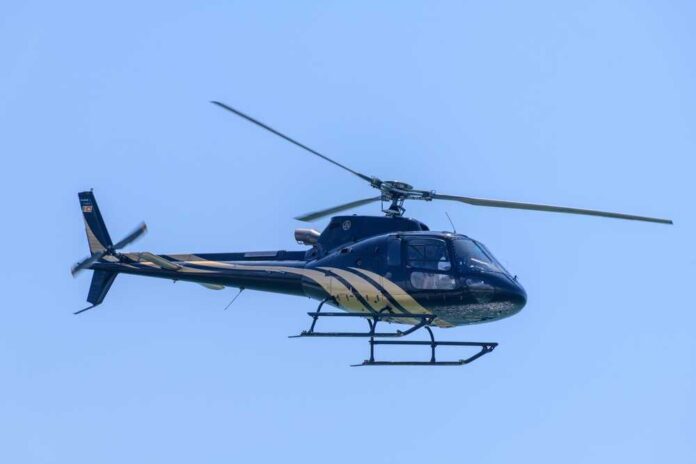
Two helicopters crashed in a midair collision over Hammonton Municipal Airport on Sunday morning at approximately 11:25 a.m., resulting in one fatality and one critical injury. The Federal Aviation Administration identified the aircraft as an Enstrom F-28A helicopter and an Enstrom 280C helicopter, each carrying only its pilot.
Emergency responders from Hammonton Police and fire departments quickly extinguished flames that engulfed one of the helicopters after it spiraled to the ground in dramatic fashion captured on video.
Hammonton Police Chief Kevin Friel confirmed that one pilot died at the scene while the second was rushed to a hospital with life-threatening injuries.
The crash occurred over the municipal airport serving this agricultural community of 15,000 residents in Atlantic County, located approximately 35 miles southeast of Philadelphia near the Pine Barrens wilderness area.
The incident marks a tragic day for this close-knit community that relies on its airport for various aviation services and emergency response capabilities.
NEW: Midair helicopter crash in New Jersey leaves 1 dead and another critically injured >>> https://t.co/foBFF3IDDM pic.twitter.com/L7GIn0xrU1
— KFVS News (@kfvsnews) December 28, 2025
Investigation Centers on Pilot Communication Failures
Federal investigators from the FAA and National Transportation Safety Board will examine critical safety protocols that may have failed during the collision. Former crash investigator Alan Diehl, who previously worked for both agencies, explained that investigators will prioritize reviewing communications between the pilots and determining whether each aircraft was visible to the other pilot.
The investigation will focus on cockpit visibility limitations and whether one helicopter approached from the other pilot’s blind spot during the fatal encounter.
“Virtually all midair collisions are a failure to what they call ‘see and avoid,'” Diehl stated, highlighting the fundamental aviation safety principle that pilots must maintain visual awareness of surrounding aircraft.
This investigation will likely examine whether existing safety protocols at Hammonton Municipal Airport adequately protect against such collisions. The fact that both pilots failed to avoid each other despite operating similar aircraft types in the same airspace raises concerns about current aviation safety standards and enforcement mechanisms.
Weather Conditions Eliminate External Factors
AccuWeather reported mostly cloudy conditions with light winds and good visibility at the time of the crash, effectively eliminating weather as a contributing factor to this tragedy. These favorable flying conditions make the collision even more troubling, as both pilots should have had adequate visibility to spot and avoid the other aircraft.
The good weather conditions will likely shift investigative focus toward pilot error, mechanical failure, or inadequate air traffic management protocols at the municipal airport.
The absence of adverse weather conditions strengthens the case for examining regulatory oversight of smaller airports and whether current safety requirements adequately protect pilots and the public.
This incident demonstrates that even under ideal flying conditions, aviation accidents can occur when proper safety protocols fail or receive insufficient enforcement.
The Trump administration should examine whether previous regulatory approaches have adequately prioritized aviation safety over bureaucratic inefficiency, ensuring that practical safety measures receive proper implementation and enforcement at airports nationwide.