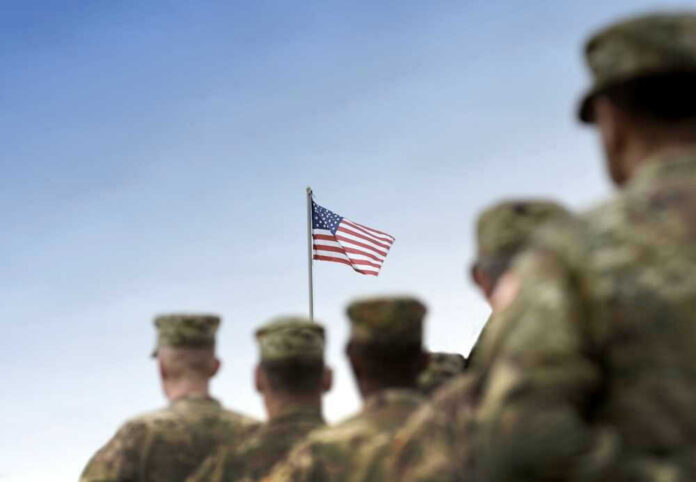
Reigniting urgent questions about internal security and the policies that left troops vulnerable on American soil, an active-duty Army sergeant using a personal handgun wounded five fellow soldiers at Georgia’s Fort Stewart base.
Story Snapshot
- Five soldiers were shot and hospitalized at Fort Stewart, Georgia, by an Army sergeant with a personal weapon.
- The base was swiftly locked down, and the suspect was subdued and arrested by fellow soldiers.
- All victims are stable and expected to recover, but the incident highlights ongoing concerns with base security and insider threats.
- The attack has renewed debate over personal firearms on military property and the effectiveness of current security protocols.
Fort Stewart Shooting: What Happened and Why It Matters
Fort Stewart—the largest Army post east of the Mississippi—was rocked by an active shooter incident. An Army logistics sergeant, 28-year-old Quornelius Radford, used a personal handgun to shoot five fellow soldiers at his workplace, not during a training exercise or drill.
The base immediately went into lockdown, with all gates closed and emergency protocols triggered as law enforcement and military police responded. The suspect was quickly subdued by his own colleagues, preventing further harm, but not before fear and uncertainty swept through the installation and local community.
Fort Stewart’s command and law enforcement agencies reacted with speed and professionalism, but the incident exposed vulnerabilities in our military’s internal security systems.
The shooter’s ability to bring a personal weapon onto base, undetected until shots were fired, underscores a troubling gap in oversight.
Historically, Fort Stewart has been home to over 15,000 active-duty personnel, and while shootings on U.S. military installations are rare, high-profile past tragedies like the 2009 Fort Hood attack remind us that insider threats remain a persistent risk.
The motivations behind this attack remain unknown, with no prior warnings or public indications that the suspect posed a danger to others.
Immediate Response and Ongoing Investigation
After the shooting, the base was sealed off, families and residents faced hours of anxious uncertainty, and law enforcement—including Georgia State Police, FBI Atlanta, ATF, and military police—worked in tandem to secure the scene and begin their investigation.
Brigadier General John Lubas, the base commander, provided press updates in the afternoon, confirming that all five wounded soldiers were hospitalized, three of whom required surgery.
Thankfully, all victims are now reported stable and are expected to recover. The suspect remains in custody as investigators work to determine motive and examine how a personal firearm entered a supposedly secure facility.
The incident has already prompted an internal review of security protocols at Fort Stewart, with likely ripple effects across other military installations. Leadership at the base and in Washington have been briefed, and the White House is closely monitoring the situation.
Military families and the local community, shaken by the events, are calling for answers and assurances that safety measures will be improved. The immediate disruption to base operations was significant, and the psychological impact on soldiers and families is only beginning to be addressed.
Security Gaps, Policy Debates, and Conservative Concerns
This attack at a major U.S. Army base brings constitutional and policy debates to the forefront. While the military must maintain discipline and safety, the fact that a personal weapon was used—not a military-issued firearm—highlights the ongoing challenge of balancing individual rights with collective security.
For Americans, this raises critical questions: Are “woke” risk-averse policies and bureaucratic overreach distracting leadership from core security priorities? Is the focus on social engineering and compliance draining resources away from real, actionable threat prevention?
The Biden administration’s prior years saw increased regulation and spending on questionable diversity programs, while basic security checks and mental health support for service members were often underfunded or overlooked.
Some experts and commentators are now pushing for stricter controls on personal firearms for service members, others argue that such moves would undermine individual liberty and the Second Amendment, even within the military.
What’s clear is that the tragic events at Fort Stewart demand a comprehensive review of both internal security procedures and support systems for those under immense stress.
The Trump administration faces a crucial test: restore a focus on common-sense security, strengthen mental health intervention, and ensure that constitutional rights are protected—without sacrificing the safety of those who serve.
As the investigation continues, military leaders and policymakers must prioritize real solutions over symbolic gestures. The community at Fort Stewart, and across the nation, deserve confidence that our bases are secure and our warriors protected—not just from foreign adversaries, but from threats within.
For Americans, this incident is a sobering reminder that failing to get the basics right on security and discipline puts everything else at risk—including the freedoms and values we hold dear.
Sources:
Georgia Army Base Lockdown: Shooter Subdued After 5 Soldiers Wounded
US Army sergeant suspected of shooting, wounding five fellow soldiers at Fort Stewart in Georgia
Active shooter incident, casualties reported at Fort Stewart, Georgia