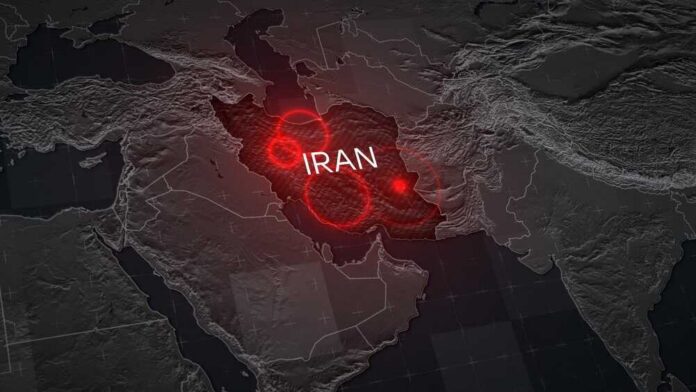
The Strait of Hormuz doesn’t need to stay closed for long to turn a distant war into an expensive surprise on your grocery receipt.
Story Snapshot
- IMF Managing Director Kristalina Georgieva warned that the Iran-linked conflict can push the world toward higher prices and slower growth.
- Iran’s closure of the Strait of Hormuz sits at the center of the shock because it threatens global oil flows and energy confidence.
- Asia faces acute vulnerability because many economies rely heavily on imported fuel and stable shipping lanes.
- IMF economists framed the outcome bluntly: price pressure and weaker growth become the default path under prolonged conflict.
Hormuz Turns a Regional War into a Global Cost-of-Living Problem
US and Israeli strikes against Iran set the timeline, but oil markets set the consequences. When Iran moved to close the Strait of Hormuz, the crisis stopped being “over there” and started showing up everywhere energy touches.
That includes transportation, manufacturing, food distribution, and household utilities. The IMF’s warning isn’t theoretical: oil disruptions can sprint through supply chains faster than central banks can react.
Kristalina Georgieva delivered the key message at the Asia in 2050 Conference in Bangkok: conflict-driven uncertainty can rattle sentiment, spike energy prices, and slow growth, especially if the fighting drags on.
Her emphasis on “repetitive shocks” lands because families and businesses already feel whiplash from recent years. When the economy runs on confidence, a war that threatens a critical chokepoint taxes that confidence every single day.
Why the IMF’s “Higher Prices, Slower Growth” Line Hits So Hard
IMF economists put the diagnosis in plain language: “All roads lead to higher prices and slower growth.” That statement carries weight because it reflects how modern inflation works.
Energy costs seep into everything, from fertilizer to factory heat to freight rates. Even people who never buy a barrel of oil pay for it indirectly. Prolonged price pressure forces households to cut back, and that demand drop becomes the “slower growth” part.
The Middle East war means that 'all roads' lead to higher prices and slower growth, says IMF Managing Director Kristalina Georgieva https://t.co/LQmWGfqvrQ pic.twitter.com/7GCf6rRSGj
— Reuters (@Reuters) April 7, 2026
The International Energy Agency description of the disruption as the largest oil market shock in history raises the stakes beyond a normal volatility story.
Markets can absorb bad news; they struggle with blocked routes and damaged infrastructure because those problems don’t resolve with a press conference.
Traders, insurers, shipping operators, and refiners must price in worst-case scenarios. That pricing behavior itself can inflate costs, even before physical shortages fully hit consumers.
Asia’s Exposure Explains the IMF’s Urgency
Georgieva singled out Asia’s risk because geography and energy reality collide there. Many Asian economies import large shares of their fuel, and they depend on predictable maritime routes.
A Hormuz disruption can tighten supply options and raise the premium paid for reliable deliveries. Maritime analyst Kpler, through its president Jean Maynier, described the situation as a real energy crisis for countries without enough domestic resources to cover a prolonged interruption.
That vulnerability matters to Americans in a way that isn’t obvious at first glance. Asia drives a significant share of global manufacturing, and higher energy costs there don’t stay local.
If factories pay more for power and transport, the final price of finished goods tends to rise, or production slows, or both. Supply chains don’t need to “break” to hurt you; they only need to get more expensive and less predictable.
Markets Want a Quick End, but Policy Must Plan for a Long One
Reports of political signals about ending the war may calm a trading day, but the IMF’s job is to think past the next headline. Georgieva’s position—better “sooner” for the whole world—reflects how quickly energy uncertainty metastasizes into broader financial conditions.
When lenders see instability, they demand higher rates or reduce exposure. That tightening hits investment, hiring, and housing long before most people connect it to Middle East geopolitics.
Uncertainty also punishes low-income countries hardest. When rich nations face their own inflation and political stress, foreign aid and budgetary room can shrink, and food insecurity can become more acute.
That ripple effect fits the IMF’s broader warning: the shock is asymmetric. The pain doesn’t land evenly across nations, and it rarely lands evenly across classes within nations. People living paycheck to paycheck absorb “higher prices” as a direct reduction in freedom.
What a Common-Sense, Pro-Growth Response Looks Like
American conservative values emphasize resilience, energy security, and avoiding policy fantasies that collapse at the first crisis. The IMF can’t set US energy policy. Still, the logic points toward the same conclusion voters have learned the hard way: a nation that restricts reliable energy production while the world burns invites inflation at home.
Policymakers should prioritize stable supply, realistic transition timelines, and permitting that treats energy as infrastructure, not ideology.
Georgieva’s advice to focus on what countries can control sounds basic because it is basic—and it’s still rare. Governments can build buffers, streamline regulations that choke responsiveness, and avoid spending sprees that amplify inflation when prices already surge.
IMF monitoring for the next World Economic Outlook matters because it shapes expectations. Expectations shape wage demands and price setting. That’s how a faraway conflict becomes a domestic political earthquake.
The open loop now sits with duration: if the conflict persists, energy costs harden into a new baseline, and “temporary” inflation starts acting as a permanent one.
If it ends quickly, the world still learns the same lesson: chokepoints rule the modern economy, and the bill comes due fast. Georgieva’s warning reads less like a prediction and more like a reminder that stability is a resource—one that disappears when leaders gamble with it.
Sources:
Middle East war threatens global recovery, IMF warns
IMF warns of global economic slowdown due to Middle East conflict